Globalisation now runs on two tracks. While the movement of people and goods has slowed, digital movement accelerates at an ever-faster pace. The speed and direction of the two have diverged. What skills are needed to keep up with this change?
The World Economic Forum, WEF, known for its Davos summit, has published a new report charting the direction of work, skills and change in the present and the future. The report aims to place the pandemic and the disruption it has caused in the longer context of economic and technological development.
The report predicts, like many others, that technological development will accelerate the change in work in the coming years. It estimates that some 85 million jobs will disappear by 2025 as automation, robots and machines do that work better. At the same time, an estimated 97 million new jobs will emerge, adapted to a division of labour between people, machines and algorithms. AI becomes an assisting intelligence.
In this shift, the importance of learning and new skills grows. The report emphasises meta-skills such as critical thinking, problem-solving, self-direction, flexibility, stress tolerance and active learning. The share of remote and hybrid work grows. By educated estimates, 84 per cent of work will be performed digitally at speed, and 44 per cent of all work will be done remotely in 2025.
In leading hybrid work, the management of community, meaningfulness and organisational culture grows in importance. Help with the challenges of leadership may be found not in technology but in humanism.
The Cambridge Institute for Sustainability Leadership (CISL) and the University of Cambridge School of Arts and Humanities published together an interesting report, whose premise is that as the significance of technology grows, so does the significance of the disciplines close to it. In this line of research, the humanities and the arts may receive too little attention.
The situation is not new. The tradition of setting natural science against humanism is long. C.P. Snow dismantled that opposition brilliantly in his famous 1959 essay The Two Cultures. In his essay, Snow described how the split of the intelligentsia into two parts, natural scientists and “literary intellectuals”, originally came about.
According to Snow, this split gives rise to two different cultures. The technical-scientific culture rising from natural science sees the modern world fairly realistically and has the means to solve the world’s great problems, such as closing the gap between the industrialised and non-industrialised world. The culture of the literary intellectuals is what is usually considered true culture, high culture and the greatest achievement of human thought. According to Snow, it lives firmly in the past and prevents real development.
These two cultures rarely exchange ideas with one another.
Snow suggests that solving the world’s problems starts with narrowing the divide between the two cultures.
The Cambridge paper raises three important themes. First, the so-called VUCA challenges (Volatile, Uncertain, Complex and Ambiguous) require a multidisciplinary approach. Second, leadership emphasises the human capacity to imagine alternative worlds and realities. Third, we need deep reflection on what it means to be human.
It seems evident that all these themes create a need for the humanities and the arts.
At Co-founders we want to break the division into two cultures in business leadership. The importance of numbers and technology does not diminish when humanism and the arts are brought into problem-solving. In fact, this business environment of uncertainty and a hard-to-predict future, with its many scenarios, underlines the importance of imagining alternative worlds. Our task is to help you expand your ways of thinking and acting by bringing different sciences, interpretations and realities together, or at least closer to one another.
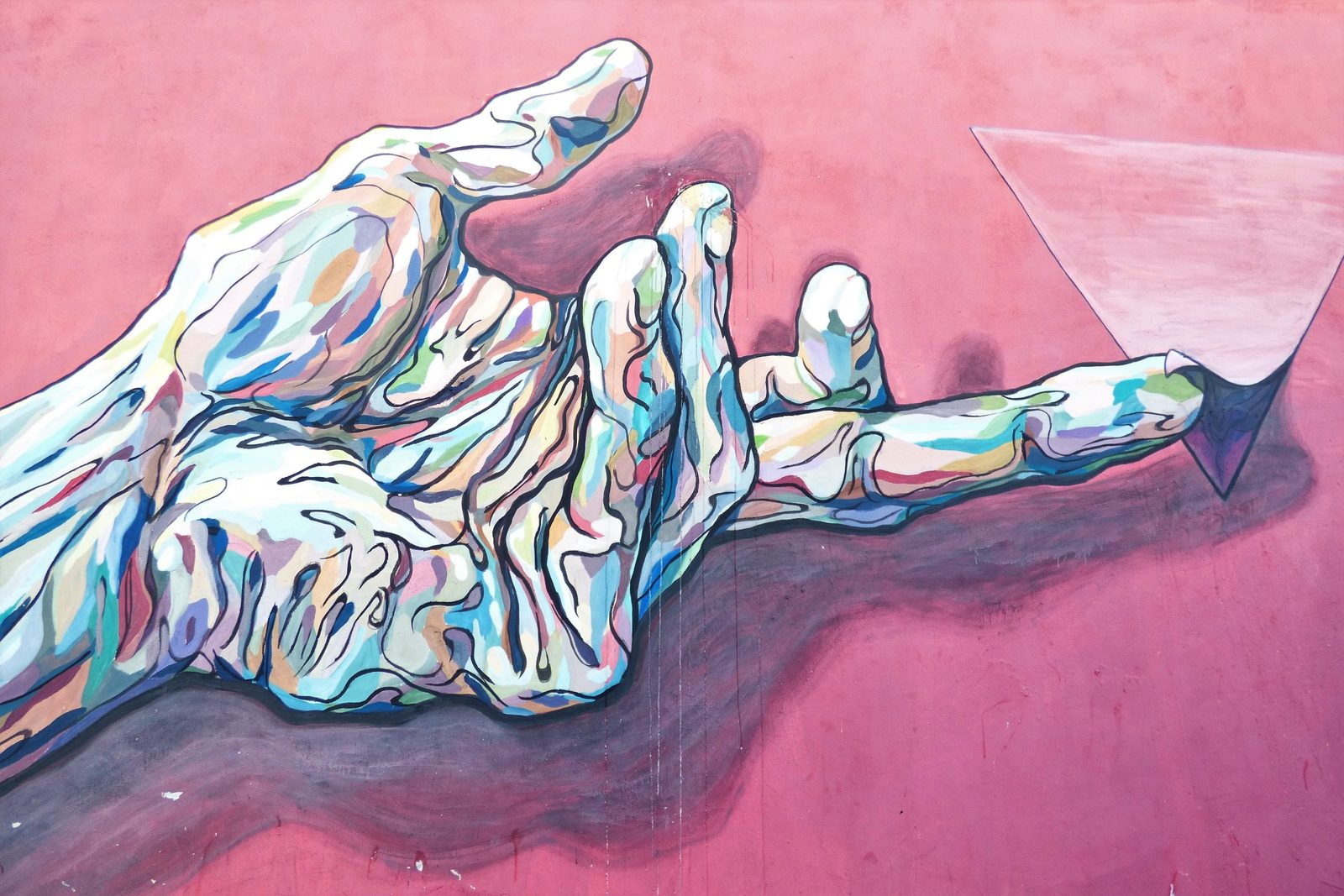
Featured photo: Gustavo Centurion for Unsplash